
Quick answer: To check one appliance at a time, the Kill A Watt P4400 is the simplest tool: plug it in, read the kilowatt-hours, no app [4]. For a smart plug with a power meter, the Eve Energy works if your home has a hub with Thread border router and Matter controller functions [3]. To see the whole house, including central air and the water heater, an in-panel monitor like the Emporia Vue 3 is the only option here that does it [5].
At a glance
Why New Jersey households are watching usage
Electricity costs more here than in most of the country. The U.S. Energy Information Administration reports that New Jersey’s average residential price was 24.61 cents per kilowatt-hour in August 2026, compared with 18.16 cents nationally [1]. The jump came in June 2025: the Board of Public Utilities says average monthly bills rose 17.23% to 20.20% that month depending on the utility, largely because of the July 2024 PJM Base Residual Auction [2]. For the year that began June 1, 2026, the board projected changes of -1.8% to +1.6% [2], so last year’s increase is still in today’s bills.
At those prices, knowing which devices run all day is worth something. An old basement fridge, a dehumidifier or a gaming PC left on can add up, but you can’t tell from the bill alone.
How we chose
- Measures energy, not just on and off. Every pick reports usage in watts or kilowatt-hours.
- Rated for a standard 15-amp outlet. We list the maker’s load rating so you don’t overload a plug.
- Safety listing where the maker states it. We note UL or other listings only when the maker publishes them.
- Recall check. We searched the CPSC recall database for each brand on November 2, 2026. None of our picks has been recalled. Emporia’s North American smart plugs were recalled in 2023 for an electric shock hazard [7], so we left them out; Emporia’s in-panel monitor is a different product and isn’t part of that recall.
Our picks
Best for: Checking one appliance at a time, no app
P3 Kill A Watt Electricity Usage Monitor (P4400)
Plug the appliance into it and it counts kilowatt-hours like your utility meter, so you can work out what a fridge or dehumidifier costs per month at your rate.
- Shows cumulative kWh, plus volts, amps, watts, hertz and VA [4]
- Forecasts costs by day, week, month or year [4]
- Max 15 A, 125 VAC, 1,875 VA; 0.2% accuracy [4]
Safety check: P3's page doesn't list a safety certification; look for a UL or ETL mark on the package. No CPSC recall found for the P4400 (checked 2026-11-02).
Watch out: No Wi-Fi, no history and no remote switching. You have to read the screen, and it only measures what's plugged into it.
See it on Amazon → We chose it from specs and safety records; we haven't tested it ourselves.
Best for: Apple Home and Thread households
Eve Energy Smart Plug with Power Meter (U.S.)
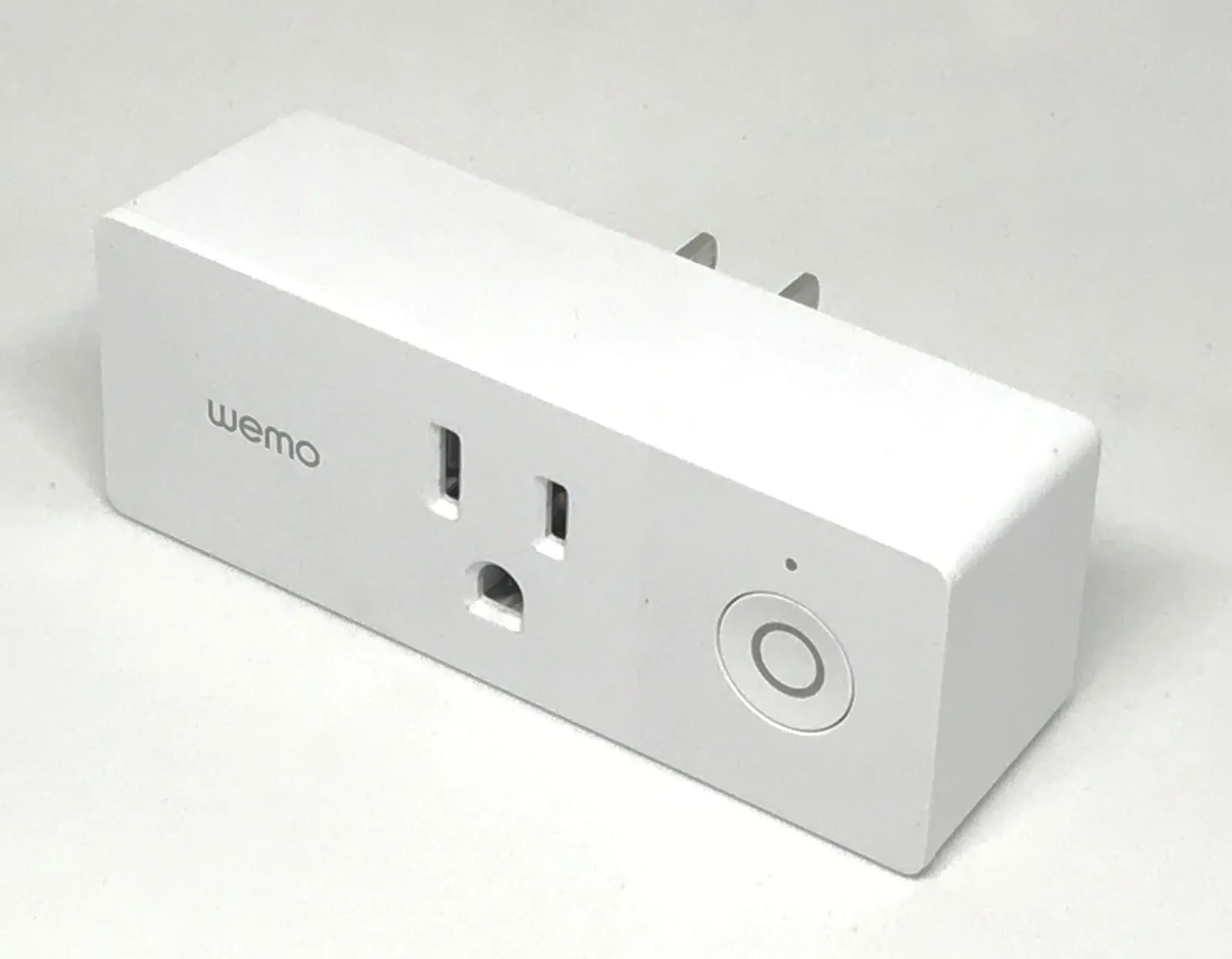
Eve's plug runs on Thread and Matter rather than Wi-Fi, so it fits a home that already has a hub with Thread border router and Matter controller functions [3].
- U.S. version: 120 V, 60 Hz, max 15 A, 1,800 W [3]
- Needs a hub with Matter controller and Thread border router functions [3]
- Works with iPhone or iPad, or Android 8.1 or later [3]
Safety check: Eve's spec page doesn't list a safety certification; check the package for a UL or ETL mark. No CPSC recall found for Eve smart plugs (checked 2026-11-02).
Watch out: Without a hub that has a Matter controller and Thread border router, it won't work at all [3]. Check that your hub qualifies before you buy.
See it on Amazon → We chose it from specs and safety records; we haven't tested it ourselves.
Best for: Seeing the whole house, circuit by circuit
Emporia Vue 3 Home Energy Monitor
Plug-in meters can't measure hard-wired loads like central air, an electric water heater or a dryer. The Vue connects sensors to the mains and individual breakers in your panel, so it can show those circuits and solar too [5].
- Two 200 A sensors for the mains; up to 16 50 A sensors for individual circuits [5]
- Monitors solar net metering without extra equipment [5]
- Connects over 2.4 GHz Wi-Fi [5]
Safety check: Emporia says the Vue is UL and CE listed. The 2023 Emporia recall covered its smart plugs, not the Vue [7]. No CPSC recall found for the Vue (checked 2026-11-02).
Watch out: It installs inside your electrical panel. If you aren't comfortable working in a live panel, hire a licensed electrician, which adds to the cost. Emporia says panels with busbar-only access need its flexible sensors [5].
See it on Amazon → We chose it from specs and safety records; we haven't tested it ourselves.
Buying guide
- Start cheap. A plug-in meter answers most questions: is the old fridge worth replacing, and what does the dehumidifier cost per month?
- Do the math with your own rate. Multiply the kilowatt-hours a device uses by the price per kWh on your bill, including delivery charges.
- Respect the rating. The smart plug here is rated 15 A and 1,800 W [3]. Don’t use them for high-draw heating appliances.
- Go whole-house for big loads. Central air, electric heat and water heaters are hard-wired. Only an in-panel monitor will show them.
Sources
- U.S. Energy Information Administration: Electric Power Monthly, Table 5.6.A, Average Price of Electricity by State, August 2026
- New Jersey Board of Public Utilities: Order on 2026 Residential Universal Bill Credit, June 30, 2026
- Eve Systems: Eve Energy
- P3 International: P4400 Kill A Watt
- Emporia Energy: Energy Monitors
- CPSC: Keep Warm and Safe This Winter: Tips for Using Generators, Furnaces and Space Heaters (2026)
- CPSC: Emporia Recalls North America Smart Plugs Due to Electric Shock Hazard
Common questions
How much does electricity cost in New Jersey?
The U.S. Energy Information Administration put the average New Jersey residential price at 24.61 cents per kilowatt-hour in August 2026, compared with 18.16 cents for the U.S. as a whole. Your rate depends on your utility and supplier, so check your bill.
Will a smart plug lower my bill by itself?
No. A smart plug with energy monitoring shows what one device uses and lets you switch it off on a schedule. The savings come from what you change after you see the numbers.
Can I plug a space heater into a smart plug?
The CPSC says to plug electric space heaters directly into a wall outlet, never into an extension cord or power strip, because they draw a lot of power. Don't run one through a smart plug.